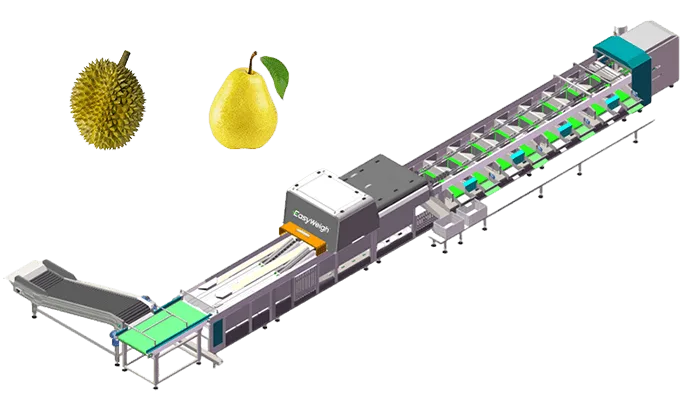
A fruit sorting machine is automated equipment designed to inspect, classify, and separate fruit according to defined quality or grading criteria. Unlike basic conveying equipment, it evaluates characteristics such as size, color, shape, and visible defects before directing products into different output streams.
For processors handling large quantities of fresh or frozen produce, a fruit sorting machine turns visual grading into a repeatable automated operation. The referenced optical sorting systems use AI vision, multispectral cameras, and machine-learning algorithms to analyze fruit and support automated classification.
Why Fruit Needs More Than One Sorting Criterion
Fruit rarely fits neatly into a single grade based on one measurement. Two pieces may have similar dimensions but differ in color, shape, surface condition, or other visible characteristics. A useful sorting system therefore needs to assess several attributes rather than relying on one physical parameter.
Optical inspection is suited to this requirement because cameras and sensors can collect information about the product while it passes through the machine. The referenced equipment is designed to identify differences in size, color, shape, and surface defects, helping processors create more consistent product classifications.
This distinction is important when explaining what a fruit sorting machine actually does. Its role is not simply to move fruit into separate lanes. It combines product inspection with a programmed grading decision and subsequent physical separation.
How Fruit Moves From Inspection to Separation
The sorting process begins when fruit enters the equipment and reaches the inspection area in a controlled presentation. Cameras and sensors capture product information as individual pieces pass through the viewing zone. Image-analysis software then evaluates the captured characteristics against the configured sorting requirements.
AI-based algorithms can analyze information such as color, size, shape, and defects. Once the system determines the appropriate classification, the sorting mechanism separates the product according to that decision. This creates a continuous relationship between inspection and handling rather than treating quality checking as a separate manual task.
Easyweigh’s referenced optical sorting solutions are designed around this automated inspection concept, using AI vision and multispectral camera technology for fruit and vegetable sorting. The approach allows classification criteria to become part of the production workflow rather than depending entirely on operators to judge individual products.
What the Machine Evaluates on Each Fruit
A fruit sorting machine can be configured around the characteristics that matter for a particular product and grading process. Size is one common parameter because processors may need to divide fruit into different commercial grades. Color can also provide useful information when visual appearance is part of product classification.
Surface condition is another important inspection area. Visible defects can affect whether fruit enters a preferred grade or a different processing stream. Shape may also be relevant where irregular forms need to be separated from products that meet a defined appearance requirement.
The referenced optical sorting range is intended for different types of produce, including apples, peaches, plums, grapes, strawberries, cherries, berries, and other fruits. Its described capabilities show why sorting criteria should be selected according to the characteristics of the actual product rather than treated as a universal specification.
Why Product Size Changes the Sorting Setup
Fruit varies considerably in physical dimensions, and that variation affects how an automated sorting system must handle and inspect the product. Equipment designed for small fruit cannot simply be treated as identical to equipment handling large individual pieces.
The referenced product range includes configurations for small, medium, and large fruits. Examples of smaller products include cherries, berries, and kumquats, while medium-sized applications include apples, peaches, and plums. Larger examples include watermelons and melons.
Such variation makes product dimensions a practical part of equipment selection. Camera coverage, product presentation, handling components, and sorting mechanisms all need to correspond with the physical characteristics of the fruit being processed.
The same principle applies to the condition of the product entering the system. Fresh, frozen, or differently prepared produce can create different inspection requirements. The referenced systems are positioned for fresh and frozen fruits as well as other food categories, indicating that the intended application should guide system configuration.
Where Automated Fruit Sorting Fits in Processing
Automated sorting normally forms one stage within a wider processing line. Fruit may pass through washing, conveying, inspection, grading, sorting, packing, or other downstream operations depending on the product and facility.
Integration therefore matters as much as the inspection technology itself. The referenced optical sorting systems are described as capable of integrating with existing conveyor or washing lines, with customization available for different product sizes, shapes, and sorting criteria.
For processors, this means the machine should be evaluated as part of the complete material flow. Product presentation must allow reliable inspection, while the output needs to connect effectively with whatever happens next in the line. A sorter that identifies defects accurately but cannot fit the required workflow will not deliver the intended production value.
Easyweigh’s optical sorting range addresses this broader requirement by combining machine vision with automated classification for fruit and vegetable applications. Its stated use cases cover products with substantially different physical characteristics, reinforcing the importance of matching equipment configuration to the processing application.
Turning Fruit Inspection Into a Production Decision
The simplest definition of a fruit sorting machine is automated equipment that examines fruit, determines its classification according to programmed criteria, and separates it accordingly. The distinction from manual grading lies in the combination of sensing, analysis, and automatic handling within one continuous process.
For buyers, the relevant question is not simply whether a machine can inspect fruit. The system should match the product’s size, appearance characteristics, sorting criteria, and position within the existing processing line. Optical technologies can provide the inspection foundation, while AI-based analysis can turn captured product information into repeatable classification decisions.
Weight Sorting‘s referenced solutions demonstrate this application-focused model, using optical and AI-based technologies for different fruit and vegetable sorting requirements. For a processor considering automation, understanding the actual grading criteria and product flow is the starting point for determining whether a particular system is appropriate.
