Industrial companies investing in connected manufacturing often face a hardware decision before deployment begins: should they choose an Edge IoT Gateway or an Industrial IoT Controller?
The two devices are frequently discussed together because both can provide computing power, industrial interfaces, and network connectivity. However, they solve different engineering problems.
The correct selection depends on whether the system challenge is accessing industrial data or controlling industrial processes. A company upgrading existing equipment may need a gateway, while a machine builder developing new automation equipment may require a controller.
Understanding where each device belongs in the industrial architecture prevents unnecessary redesign and helps teams build more effective systems.
Your First Question Should Be: Are You Connecting Machines or Running Them?
The most important difference between the two solutions is the responsibility assigned to the hardware.
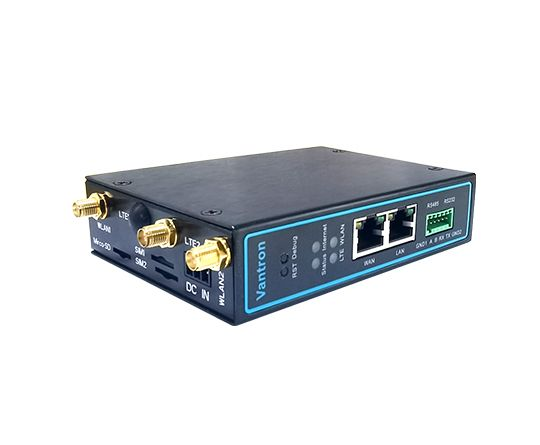
An edge computing gateway usually works between industrial devices and software platforms. Its role is to collect information, translate communication protocols, process data locally, and connect equipment with cloud or enterprise systems.
An Industrial IoT Controller operates closer to the physical process. It executes logic, manages inputs and outputs, and sends commands that influence machines directly.
A factory monitoring project and a machine automation project may exist in the same environment, but they require different computing roles.
For example, a production manager may want to collect operating information from hundreds of machines to analyze energy usage and maintenance conditions. This requires a gateway-focused solution.
A machine manufacturer designing an automated assembly system has a different requirement. The system must respond immediately to sensors and control mechanical actions, making controller capabilities essential.
The first decision is therefore not based on processor specifications. It begins with understanding whether the hardware is responsible for information flow or operational control.
If Existing Equipment Is the Problem, Start With an Edge IoT Gateway
Many industrial digitalization projects begin with a simple challenge: valuable machines already exist, but their data cannot easily be accessed.
Replacing these machines is often unrealistic because production equipment may represent years of investment. Instead, companies look for ways to connect existing assets with modern software systems.
An edge computing iot gateway provides a practical bridge between older industrial equipment and new digital platforms. It can collect information from machines, process selected data locally, and transfer useful information to monitoring or analytics systems.
A manufacturing plant, for example, may have multiple production lines using different automation devices. Gateways can help collect machine status information without changing the core control systems.
The same approach applies to energy management, warehouse automation, transportation infrastructure, and industrial monitoring projects where data visibility is the main objective.
Gateways are particularly valuable when companies want to add functions such as remote monitoring, equipment analysis, or cloud connectivity while keeping existing machine operations unchanged.
Vantron develops edge computing gateway solutions designed for industrial environments that require reliable connectivity, local data processing, and integration between field devices and digital platforms.
If Machine Behavior Is the Problem, Choose an Industrial IoT Controller
Some projects are not focused on collecting information. They are focused on making equipment perform correctly.
Industrial machines often require precise coordination between sensors, actuators, motors, and software logic. In these situations, the computing platform must directly participate in the operation process.
An Industrial IoT Controller is designed for this responsibility. It manages control instructions and interacts with equipment where timing and response accuracy are critical.
A robotic production cell provides a clear example. The system must process sensor feedback and adjust movement commands immediately. A device that only collects data cannot replace the controller responsible for machine operation.
The same requirement appears in automated packaging systems, inspection equipment, and intelligent manufacturing machines.
An edge computing gateway may still be part of the overall architecture, but it normally supports functions such as data collection, remote access, or performance analysis rather than direct control.
Projects that involve physical movement, automated decisions, or real-time machine responses should prioritize controller capabilities.
The Same Factory Can Need Both—But for Different Jobs
Industrial architectures are becoming more connected, which means gateways and controllers increasingly work together instead of competing against each other.
A modern production line may use controllers to manage individual machines while gateways collect information from multiple controllers across the factory.
The controller ensures that equipment operates correctly. The gateway collects and processes operational information to support higher-level analytics and business insights.
For example, a smart manufacturing system may use controllers for production tasks and an edge gateway for collecting machine conditions, supporting predictive maintenance, and connecting with enterprise management software.
This combination allows manufacturers to maintain reliable operations while introducing advanced digital capabilities.
The decision is therefore not always about selecting one device and eliminating the other. The better approach is determining which function is missing from the current industrial architecture.
The Better Hardware Choice Follows the Data Path and Control Path
The answer to “Edge IoT Gateway vs Industrial IoT Controller: Which One Do You Need?” depends on the direction of information and action inside the system.
Choose an Edge IoT Gateway when the priority is:
- Connecting different industrial devices.
- Collecting operational information.
- Adding analytics or cloud connectivity.
- Modernizing existing equipment.
Choose an Industrial IoT Controller when the priority is:
- Running automation logic.
- Managing sensors and actuators.
- Controlling machines directly.
- Supporting real-time industrial processes.
Future expansion should also influence the decision. Industrial systems increasingly combine connectivity, edge processing, and intelligent applications. Selecting a flexible computing foundation can help companies avoid major architecture changes as requirements grow.
Vantron supports industrial customers with embedded and edge computing platforms designed for different deployment needs, helping companies build systems based on their actual operational goals.
An Edge IoT Gateway and an Industrial IoT Controller are not competing versions of the same device. They represent two different roles in industrial computing. The right choice comes from identifying whether the project needs better visibility into machines or better control over machines. Once that requirement is clear, the hardware decision becomes much more precise.
