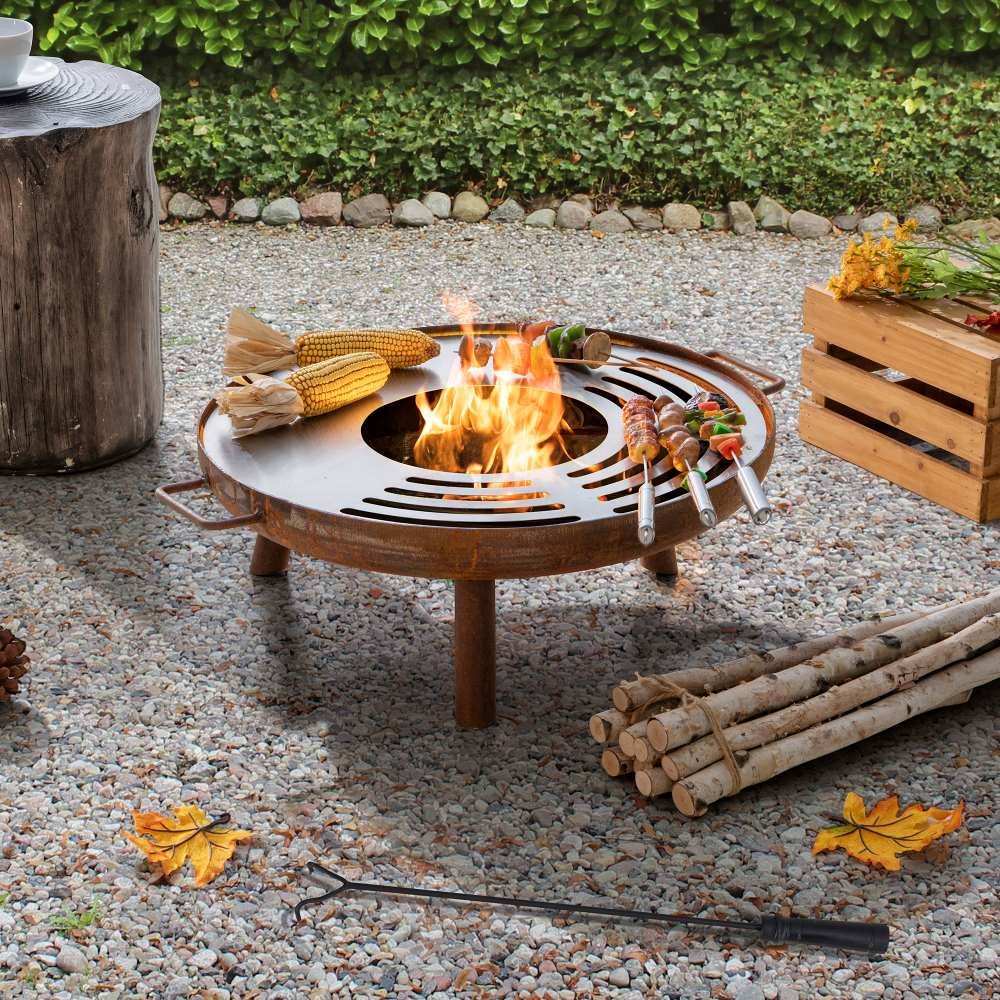
A wood-burning fireplace brings warmth and a cozy atmosphere to your outdoor space. With a quality fire pit or fireplace from SUNJOY, you can enjoy crackling flames, gather with friends, and extend your outdoor season well into the cooler months. However, a smoking wood-burning fireplace can be frustrating and diminish the enjoyment of your fire. Understanding why smoke occurs and how to fix it can help you maintain a comfortable and safe outdoor experience.
Why Your Wood-Burning Fireplace is Smoking
Smoke in a wood-burning fireplace happens when the fire does not draw air up through the chimney or exhaust properly. This can be caused by several factors, including poor airflow, damp wood, or issues with chimney design. Before you address the smoke, it is important to identify the cause. Wood that is too wet can create excess smoke as it struggles to burn. Blockages like creosote buildup or debris can also restrict airflow, forcing smoke back into your outdoor living area. Knowing these common problems helps you take the right steps to fix a smoking fireplace.
Start with the Wood You Use
One of the easiest ways to reduce smoke is to use properly seasoned wood. Seasoned wood is wood that has dried for at least six months and contains minimal moisture. When wood is dry, it ignites more easily and burns hotter with less smoke. Hardwoods like oak and maple are excellent choices for wood-burning fireplaces because they burn longer and produce more consistent heat. Storing your wood in a dry place and covering it when not in use also helps keep moisture levels down, which in turn reduces smoke when you build your next fire.
Improve Airflow and Draft
Airflow plays an essential role in how your fire burns. A lack of oxygen can cause incomplete combustion, which results in heavy smoke. When lighting your fire, arrange the logs so that air can circulate freely around them. A classic method is to begin with small kindling and slowly add larger logs as the fire builds heat. This allows the fire to establish a strong draft up the chimney or exhaust of your wood-burning fireplace.
Check your chimney or spark guard for obstructions. Leaves, bird nests, or creosote buildup can block proper airflow and force smoke outward. Regularly inspecting and cleaning these parts of your fireplace can help maintain a clear pathway for smoke to escape upward.
Adjust the Chimney Cap and Surroundings
If smoke continues to be a problem, especially when winds are strong, adjusting your chimney cap may help. Wind direction and speed can affect how smoke travels and whether it is drawn away from your seating area. A chimney cap that deflects wind downward can inadvertently push smoke back toward you. Consider consulting a professional to ensure your chimney design suits your outdoor space and typical wind conditions.
Maintain Your Fireplace Over Time
Regular maintenance of your SUNJOY wood-burning fireplace helps prevent future smoking issues. Removing ash buildup after each use keeps your fire pit clean and ready for the next fire. Ash left in the firebox can interfere with airflow and contribute to smoke. A thorough inspection before the start of each season ensures any minor problems are resolved before they become significant.
Conclusion
Fixing a smoking wood-burning fireplace involves understanding airflow, selecting dry wood, and maintaining your fireplace properly. With thoughtful care and routine checks, you can enjoy a smooth-burning fire in your SUNJOY fire pit or outdoor fireplace. A well-functioning wood fire enhances your outdoor gatherings and provides warmth and comfort that you and your guests will appreciate throughout the season.
