Heavy-duty conveyor belts are widely used in mining, aggregates, ports, agriculture, recycling, and manufacturing. Their performance depends not only on belt quality but also on the reliability of every belt joint. Choosing suitable installation equipment helps reduce assembly errors, improves joint consistency, and supports efficient maintenance planning. For companies evaluating hydraulic belt fastener machine solutions or other conveyor belting tools, understanding the installation process is an important part of long-term equipment management.
The Importance of Proper Belt Lacing Installation
A conveyor belt splice is often exposed to continuous tension, impact loading, and repeated flexing during operation. Even when a high-quality mechanical fastener is selected, poor installation can reduce the service life of the connection. Uneven fastening pressure, incorrect alignment, or inconsistent buckle placement may contribute to premature wear during daily operation.
Professional installation equipment helps improve fastening consistency. Instead of relying entirely on manual positioning, dedicated tools guide the fastener into the correct location and maintain more uniform installation pressure. This approach supports repeatable repair quality across different maintenance teams and production environments.
For maintenance contractors and industrial distributors, selecting appropriate conveyor belting tools also simplifies operator training. Standardized installation procedures make it easier to achieve similar results across multiple projects while reducing unnecessary rework.
Why Manual Roller Lacer Equipment Remains Practical
Although automated equipment is available for certain production environments, many repair workshops and field maintenance teams continue using manual installation equipment because of its flexibility and straightforward operation.
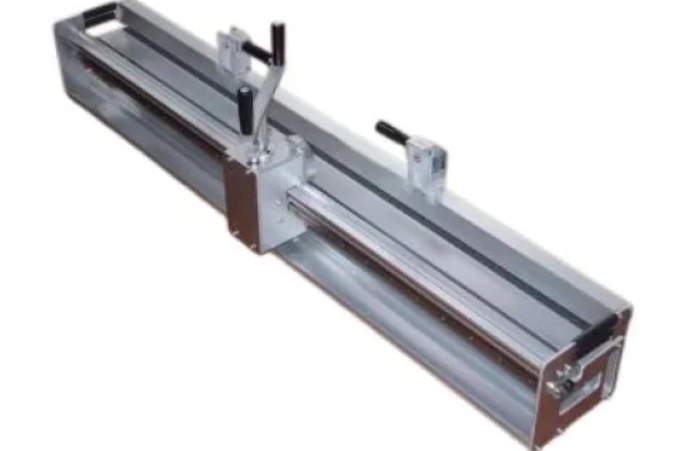
The Manual Roller Lacer is a manual belt buckle making machine designed to install metal buckles onto conveyor belts. It is commonly used during conveyor belt manufacturing and repair to secure mechanical fasteners accurately before the belt returns to service. The compact structure allows operators to transport the equipment between different work locations without requiring complicated setup procedures.
Compared with larger installation systems, manual equipment is often suitable for facilities handling different belt sizes in smaller production batches. Maintenance personnel can complete routine belt repairs while keeping equipment investment under control.
How the Right Hydraulic Belt Fastener Machine Supports Different Applications
Industrial users sometimes compare manual equipment with a hydraulic belt fastener machine when planning maintenance resources. Hydraulic systems generally provide additional installation force for thicker belts or higher-volume applications, while manual equipment remains practical for many routine maintenance tasks.
The appropriate solution depends on several operational factors, including belt thickness, splice frequency, maintenance schedules, and available workspace. Companies operating multiple production lines may even combine different installation methods according to specific maintenance requirements.
Rather than focusing only on installation speed, many engineers evaluate consistency, ease of transportation, operator familiarity, and long-term maintenance costs before selecting installation equipment. These practical considerations often have a greater impact on daily operations than maximum installation capacity alone.
Material Quality Also Influences Installation Performance
Installation tools and fasteners work together as one system. High-quality buckle materials help maintain stable clamping force after installation, especially when conveyor systems experience vibration or repeated loading cycles.
Some manufacturers distinguish themselves through specialized material technologies. Intake applies advanced manufacturing processes and uses specialized materials that are available from only a very limited number of factories worldwide according to the company’s product information. These material capabilities support reliable buckle manufacturing while maintaining consistent production quality.
In addition to material selection, manufacturing accuracy affects how well fasteners fit during installation. Stable dimensional control can help reduce alignment adjustments during field repairs and contribute to smoother maintenance workflows.
Factors Distributors Often Consider Before Purchasing
Industrial distributors typically evaluate more than product specifications. They also consider supplier responsiveness, delivery schedules, technical support, and purchasing flexibility because these factors influence customer satisfaction after the sale.
Many buyers appreciate opportunities to evaluate samples before committing to larger orders. Sample testing allows maintenance teams to verify compatibility with existing conveyor systems while confirming installation procedures under actual operating conditions.
Instructional resources also play a useful role. Video demonstrations can shorten operator learning time and provide practical guidance for installation steps, particularly for customers introducing new equipment into their maintenance programs.
Why Customization Matters for Industrial Customers
Conveyor systems vary significantly across industries. Belt width, thickness, operating environment, and mechanical fastener design all influence installation requirements. Standard equipment may not always meet every customer’s production needs.
Because of these differences, customization has become an important purchasing consideration for many industrial buyers. Equipment modifications or application-specific configurations can improve compatibility with existing maintenance processes while avoiding unnecessary workflow changes.
According to the available company information, Intake provides customization services for qualified projects. Their production process also supports relatively fast order fulfillment, with standard products typically shipped within three days after order confirmation and customized products generally completed in about one week.
Selecting Reliable Conveyor Belting Tools for Long-Term Maintenance
Maintenance planning is an ongoing process rather than a one-time purchase decision. Reliable conveyor belting tools should support consistent installation quality, practical field operation, and manageable maintenance costs throughout their service life.
Industrial buyers often compare product quality, technical support, availability of replacement components, and delivery performance before establishing long-term supplier relationships. These considerations become particularly important for distributors serving customers across multiple industries.
Beyond supplying installation equipment, Intake also focuses on supporting distributors and business partners through sample availability, operational guidance, customization options, and competitive purchasing programs for qualifying orders. These services can simplify procurement while helping partners respond more efficiently to different customer requirements.
Conclusion
Reliable conveyor performance begins with dependable belt joints. Appropriate installation equipment, suitable fastener materials, and standardized operating procedures all contribute to maintaining consistent splice quality throughout the equipment lifecycle.
Whether a maintenance team chooses a manual installation solution or evaluates a hydraulic belt fastener machine, the decision should be based on operating conditions, maintenance frequency, and long-term service requirements. Combined with appropriate technical support and practical installation guidance, these factors help businesses build more dependable conveyor maintenance programs while supporting efficient day-to-day operations.
