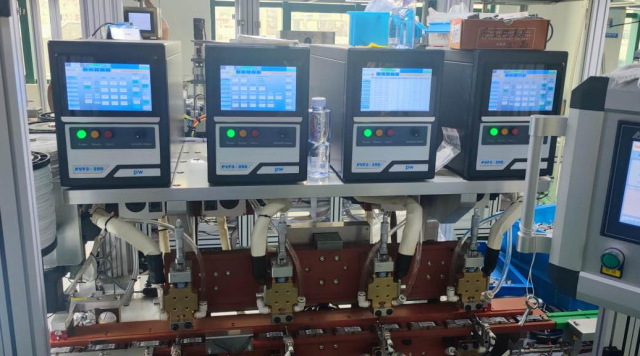
Heavy manufacturing facilities frequently battle chronic equipment faults that compromise structural integrity and inflate scrap rates. Operational disruptions on automated assembly floors usually trace back to inadequate power regulation or poor thermal management.
Resolving recurring shop-floor failures requires diagnosing root electro-mechanical causes rather than applying temporary patches. Technical teams must scrutinize every variable influencing localized nugget formation to achieve sustained output stability across demanding production shifts.
Electrical grid fluctuations introduce severe voltage drops that distort secondary current profiles during high-speed production campaigns. Power supplies lacking microsecond-level response times fail to correct these primary disturbances before weld nugget crystallization occurs.
Persistent grid instability leads directly to weak metallurgical bonds and catastrophic assembly failures during destructive crash testing evaluations. Upgrading to advanced medium-frequency inverter architectures stabilizes energy delivery across fluctuating shop-floor power networks and sensitive automation equipment.
Root Causes of Electrical Instability and Thermal Drift
Thermal dissipation hurdles multiply rapidly when joining high-conductivity aluminum alloys or thin copper foils in modern battery modules. Rapid heat loss into surrounding tooling chills the weld zone prematurely, causing cold shunts and dangerous surface cracking.
Specialized resistance welding applications demand precise pulse modulation to concentrate thermal energy strictly at the targeted metal interface. Controlling transient heat signatures prevents metal expulsion while ensuring deep metallurgical penetration across sensitive electronic components.
Dynamic resistance variations during the initial milliseconds of current application frequently destabilize multi-material component stacks. Surface oxide layers and minor thickness deviations alter initial contact resistance, tricking open-loop controllers into delivering erratic energy levels.
Advanced monitoring integration allows real-time feedback loops to modulate firing profiles dynamically, compensating for surface anomalies instantly. Implementing robust closed-loop control minimizes subsurface micro-voids across safety-critical energy storage sub-assemblies during high-volume production runs.
Overcoming Micro-Void Formation in Dissimilar Metal Stacks
Mechanical wear on electrode tips introduces severe contact geometry distortions that degrade electrical current distribution over time. Mushrooming tip faces expand the contact surface area, lowering current density and producing undersized, fragile weld nuggets.
Maintenance schedules must incorporate automated tip dressing routines to preserve optimal contact geometry across multi-shift production runs. Neglecting physical tool maintenance accelerates secondary resistance spikes and triggers unexpected component rejection rates on the line.
Electrode alignment errors compound physical wear issues, creating uneven pressure distribution across delicate electronic housings and motor laminations. Minor angular deviations force current to crowd one side of the joint, generating localized overheating and severe metal expulsion.
Tooling engineers must implement rigid mechanical clamping fixtures that resist deflection under high pneumatic force applications. Securing absolute spatial precision prevents structural warping and maintains uniform nugget dimensions across every manufactured part assembly.
Mechanical Wear and Electrode Degradation on High-Speed Lines
Secondary circuit inductance often restricts current rise times, hindering rapid thermal concentration during short-duration micro-joining sequences. Long secondary cables introduce high reactive impedance that drains available power before it reaches the weld interface.
Modern plant designers eliminate excessive cable runs by mounting compact transformers directly onto robotic gun housings. Minimizing secondary loop lengths enhances electrical conversion efficiency and reduces overall facility energy consumption significantly during active shifts.
Sophisticated diagnostic instrumentation plays a vital role in identifying hidden power losses and impending component failures before downtime occurs. Analyzing historical waveform signatures empowers plant metallurgists to detect gradual transformer degradation or cable resistance increases proactively.
Selecting dependable industrial welding solutions requires partnering with experienced component manufacturers who offer comprehensive technical support. Sunke assists global industrial facilities by providing robust hardware and dedicated engineering guidance to resolve persistent automation challenges.
Mitigating Integration Hurdles Through Expert Engineering Support
System integration bottlenecks frequently arise when mismatched communication protocols prevent shop-floor controllers from transmitting diagnostic data to master PLCs. Closed-source automation frameworks restrict data transparency, leaving plant operators blind to subtle process variations during high-speed execution.
Standardized industrial fieldbus interfaces enable seamless communication, ensuring real-time error logging and rapid parameter adjustments across complex assembly lines. Engineers must demand open-architecture compatibility when procuring new power conversion hardware and controllers.
Component obsolescence represents a silent operational risk for manufacturing plants relying on proprietary hardware subassemblies that lack long-term manufacturer support.
Procurement directors must verify component change-notification policies and ensure that replacement modules remain accessible for years post-purchase. Establishing strategic partnerships with proven technology leaders shields production lines against sudden supply chain disruptions and compliance gaps.
Sunke provides resistance welding equipment supported by technical documentation and engineering guidance for equipment selection, integration, and operation.
Comprehensive lifecycle management ensures that automated joining cells maintain peak operating efficiency throughout extended multi-year production campaigns.
Deploying advanced resistance welding applications guarantees absolute process repeatability across challenging multi-material component stacks in modern vehicle plants. They continue to empower automotive and battery manufacturing leaders by bridging the gap between raw power delivery and flawless execution.
Selecting proven industry partners guarantees long-term productivity gains and absolute quality stability across every automated production line.
Facility managers striving for total operational excellence must prioritize robust hardware reliability and transparent vendor communication protocols. Eliminating chronic production defects requires a systematic approach to electrical design, thermal control, and mechanical stability.
Utilizing resilient industrial welding solutions empowers modern assembly plants to overcome persistent shop-floor hurdles and achieve zero-defect manufacturing targets. Strategic equipment investments secure long-term profitability and uncompromised structural integrity across global industrial markets.
