A jacket can feel warm across the chest yet noticeably cold around the arms, or provide even protection while restricting movement in areas that bend frequently. These differences often come down to where insulation sits, how much of the garment it covers, and how the layers work together.
The design of an insulating lining is not simply a matter of adding warmth throughout; it involves deciding which body areas need consistent heat retention and which benefit from greater flexibility. Y-Warm’s thermal insulation technology is one example of a material solution used in apparel, where placement can influence the finished garment’s comfort and function.
Full-Body Coverage: Consistent Warmth Across the Garment
Full-body insulation places a thermal layer across most or all of the garment’s main panels. This arrangement is common in jackets intended for cold conditions, where the chest, back, and sleeves all require a similar level of protection. Continuous coverage can reduce noticeable differences in warmth between adjacent areas, particularly when the garment is worn outdoors for extended periods.
A uniform layout can also simplify pattern development and assembly. Since the insulation follows the garment’s overall shape, manufacturers can plan panel dimensions and attachment methods around a consistent material layer. However, full coverage does not automatically produce uniform comfort. Differences in fabric thickness, seam construction, fit, and exposure to wind can still affect how warm individual areas feel.
The main consideration is whether the wearer needs consistent insulation during the intended activity. A person standing outdoors for long periods may benefit from broad coverage, while someone who frequently moves between indoor and outdoor environments may find a heavily insulated garment unnecessarily warm. The performance of an insulating lining should be considered alongside the garment’s intended climate, activity level, and layering system.
Zoned Insulation: Matching Material Placement to Body Needs
Zoned insulation uses different coverage levels across selected garment areas. The torso may receive more thermal protection, while the underarms, sides, or parts of the sleeves use lighter materials or less insulation. This arrangement reflects the fact that the body does not generate heat or experience cold exposure evenly during movement.
The back and chest often require substantial protection because they cover large areas of the torso. By contrast, underarm regions produce considerable heat during exercise and need room for movement. Reducing insulation in selected locations can help manage bulk and support ventilation, although the design must still account for wind exposure and the garment’s overall thermal requirements.
Zoning requires careful planning because abrupt changes in thickness may create uncomfortable transitions or visible differences in the garment’s shape. Designers can use gradual changes in panel dimensions or carefully positioned seams to make these transitions less noticeable. A well-planned insulating lining layout should follow the garment’s movement patterns rather than simply dividing the body into arbitrary sections.
Comparing Comfort, Mobility, and Thermal Performance
Full coverage and zoned placement serve different purposes, so neither arrangement is suitable for every garment. Full coverage may provide more consistent protection in cold environments, while zoning can reduce unnecessary bulk in areas that bend, stretch, or generate more body heat. The decision depends on the balance between warmth, movement, and expected exposure.
Garment fit can change the outcome significantly. Insulation compressed tightly against the body may not retain the same volume of still air as a layer with adequate space. Conversely, excessive looseness can allow cold air to circulate inside the garment. Sleeve articulation, shoulder construction, and panel shaping should all be assessed alongside insulation distribution.
Testing should reflect actual wearing conditions. Thermal measurements can compare temperature differences across garment panels, while wear trials reveal whether certain areas feel too warm, cold, or restrictive. Activities such as walking, cycling, and reaching overhead can expose problems that static assessments may miss. A useful evaluation of an insulating lining considers both thermal behavior and freedom of movement throughout the garment.
Material Selection and Construction Considerations
The insulation material must suit the planned coverage pattern. Flexibility, thickness, weight, recovery after compression, and compatibility with outer fabrics all influence whether a material works well across large panels or in smaller zones. Attachment methods also matter: stitching, bonding, and lamination can affect drape, softness, and the way different layers move against one another.
For zoned designs, the edges between insulated and less-insulated sections deserve particular attention. Poorly positioned joins may create pressure points or allow cold spots to develop. Full-coverage designs have different challenges, including maintaining an even material distribution around curved panels, sleeve seams, and garment openings. Prototype testing helps identify these issues before production.
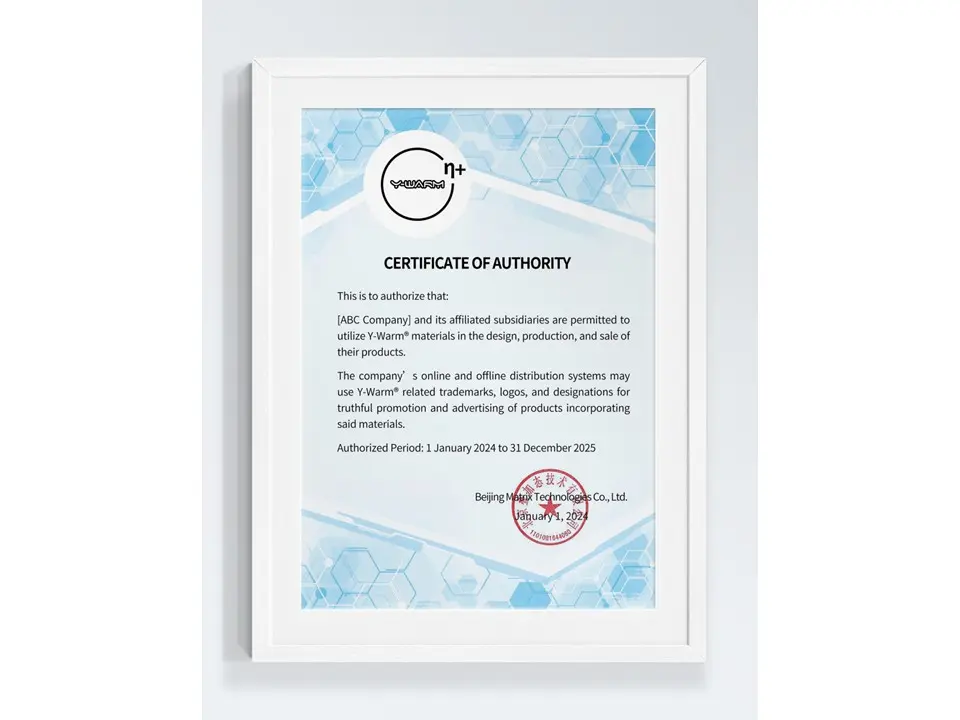
For brands and consumers seeking to identify genuine material use, documentation and labeling provide useful context. Y-Warm’s official authorization certificate confirms that the brand is authorized to use Y-Warm® thermal insulation technology and that the technology is protected by patents in multiple countries. This documentation supports recognition of authorized use, while the garment’s actual performance still depends on its material selection and construction.
Conclusion
The decision between full-body coverage and zoned warmth begins with the garment’s purpose, not simply the amount of insulation available. Broad coverage suits applications that require consistent protection, whereas targeted placement can support mobility and reduce excess warmth in selected areas.
Y-Warm develops thermal insulation technology for apparel and provides official authorization documentation to help identify genuine, authorized use. Apparel brands can learn more about its technology when developing garments with carefully planned insulation layouts.
