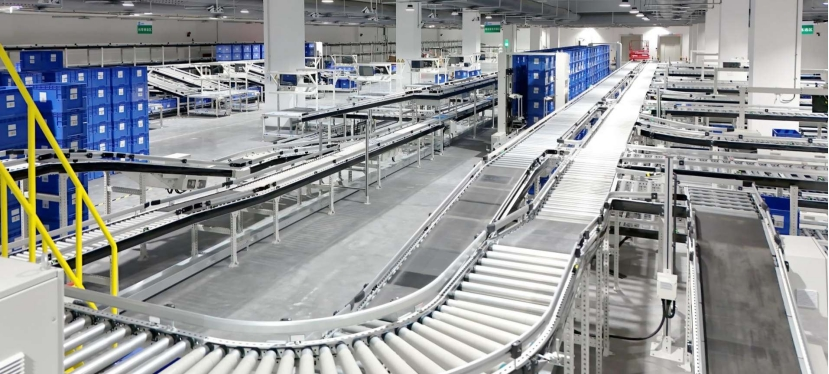
The relentless pace of modern commerce places intense pressure on logistics facilities to process inventory faster than ever before. While much attention is traditionally given to vertical storage density, the horizontal movement of goods across the expansive warehouse floor is equally critical to overall supply chain success.
When manual labor or legacy machinery dictates transit speeds, facilities inevitably suffer from erratic transfer rhythms, unpredictable traffic jams, and severe operational bottlenecks. These physical delays immediately translate into missed service level agreements and escalated labor overhead.
To establish a truly resilient distribution network, facility directors must understand how a technological overhaul directly accelerates internal transit times. By strategically implementing automated warehouse conveyor systems, operations managers can help reduce the chaotic, stop-and-go nature of traditional floor transport.
This transition helps coordinate the movement of materials between receiving docks, storage areas, and shipping zones. By improving workflow coordination and reducing unnecessary manual steps, it can support more efficient daily operations.
Helping Reduce Traffic Jams With Intelligent Power Management
A primary factor that disrupts continuous material flow is the reliance on outdated, energy-draining transport machinery that struggles to maintain consistent speeds during peak operational shifts. When horizontal transit routes experience sudden surges in carton volume, older centralized motors frequently fail to adapt quickly, causing severe physical backlogs that ripple backward across the entire facility.
Distributed control allows conveyor sections to respond more efficiently to operational requirements, helping maintain consistent material movement across connected work areas.
For example, BlueSword’s Conveyor System uses 100% servo control and a distributed control architecture to support responsive material handling and simplified troubleshooting. According to BlueSword’s product specifications, its conveyor system can achieve energy savings of up to 51%, helping reduce the energy consumption associated with warehouse material handling.
By significantly lowering the power consumption of individual mechanical segments, operations can sustain high-velocity material transit without inflating their daily utility expenditures.
Adapting to Volume Shifts Through Modular Routing Flexibility
Beyond simply moving goods in a straight geometric line, effective material flow requires the mechanical ability to seamlessly merge, divert, and sort inventory across complex, intersecting facility zones. Fixed conveyor layouts can make it more difficult for warehouses to adapt to changes in storage configurations, handling requirements, and throughput demand.
When layout modifications require weeks of downtime and extensive structural engineering, operations suffer massive financial losses. Upgrading to automated warehouse conveyor systems solves this spatial rigidity by introducing highly adaptable, modular component designs that support rapid layout transformations.
BlueSword’s modular conveyor system can reduce installation time by 40%, helping simplify system implementation and future upgrades.
The system uses puncture-style wiring and tool-free assembly to simplify conveyor installation and component connections. According to BlueSword’s product specifications, its tool-free assembly design reduces setup time from 3 minutes to 5 seconds, simplifying the installation of individual components.
Sustaining Continuous Movement via Real-Time Diagnostics
The absolute greatest threat to maintaining a high-velocity horizontal material flow is unplanned mechanical downtime. An undetected electrical or mechanical fault along a critical conveyor route can interrupt material movement and delay downstream warehouse operations.
Without effective monitoring and diagnostic tools, maintenance teams may have difficulty identifying equipment faults before they interrupt material movement. Implementing an advanced Conveyor System shifts this dynamic from reactive to highly proactive through continuous real-time diagnostic monitoring.
BlueSword’s distributed conveyor system uses CAN bus communication for real-time fault detection, supporting more efficient equipment monitoring and troubleshooting. Real-time fault detection helps maintenance personnel identify equipment issues more quickly and locate potential problem areas for troubleshooting.
BlueSword’s distributed control architecture supports real-time diagnostics and easier troubleshooting. According to the product specifications, CAN bus diagnostics can help reduce system downtime by up to 30%.
Improving Warehouse Throughput with Integrated Conveyor Systems
Optimizing the continuous horizontal transit of goods is an absolute necessity for organizations aiming to achieve frictionless, end-to-end fulfillment excellence. By critically analyzing where physical traffic jams, routing rigidities, and unexpected mechanical failures disrupt the daily operational rhythm, facility leaders can deploy highly targeted mechanical solutions to overcome these physical hurdles.
Integrating a conveyor system can help standardize material transfers between warehouse zones and improve the consistency of internal logistics operations. These advanced digital and mechanical networks ensure that raw materials and finished goods glide seamlessly from one functional sector to the next, helping reduce transfer delays between connected warehouse zones and improving the consistency of internal material flow.
For supply chain decision-makers seeking to successfully future-proof their expansive distribution networks, partnering with proven industry manufacturers like BlueSword provides the necessary engineering expertise to execute these vital infrastructure upgrades seamlessly. Flexible and energy-efficient conveyor infrastructure can support more adaptable warehouse operations as logistics requirements evolve.
