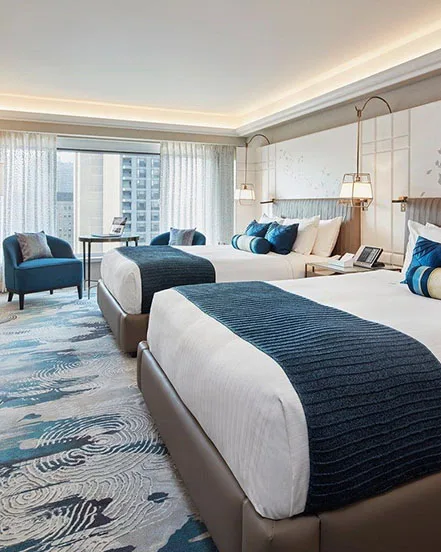
Maintaining a five-star hospitality rating requires precise spatial coordination across guest rooms and common areas. Premature surface wear, misaligned joinery, or faded upholstery in luxury properties can trigger negative guest reviews and damage brand reputation. Selecting suitable furnishings involves evaluating commercial durability alongside refined aesthetic appeal.
Procurement teams facing high guest turnover rates must look beyond initial visual appeal to assess underlying engineering. Many luxury projects fall into a common trap: choosing visually striking furniture designed specifically for residences, without considering the constant daily wear and tear in hotel spaces. Guest rooms and lobbies are used far more frequently than private residences; guests carry luggage, pull chairs, and cleaning staff wipe surfaces multiple times a day. Incorporating specialized hotel contract furniture helps developers align architectural vision with strict commercial performance standards required by international luxury operators.
Key Standards for Selecting Hotel Contract Furniture
Luxury hotel environments present rigorous usage conditions that residential items cannot withstand. Guestroom casegoods and lobby seating endure continuous daily handling, cleaning chemical exposure, and heavy luggage impacts. Standard residential construction may not withstand the demands of intensive commercial use.
Commercial-grade engineering incorporates reinforced mortise-and-tenon joinery, heavy-duty drawer glides, and scratch-resistant topcoats. These structural enhancements support long-term stability while preserving the visual elegance expected by discerning global travelers.
Evaluating Upholstery and Performance Fabrics
Soft seating in high-traffic lounges requires specialized fabric specifications. Specifying materials with high Wyzenbeek or Martindale double-rub counts helps prevent surface pilling and premature thread degradation in high-contact seating areas.
Sofas and armchairs in public areas will continuously bear the contact of guests sitting, moving, and rubbing against the fabric surface; inferior textiles will pill and develop a worn appearance within months, thus undermining their high-end positioning.
Integrating stain-resistant treatments and moisture-barrier backings aids in protecting internal foam cores from liquid spills. The procurement team collaborates with established suppliers like BFP Furniture, enabling them to access a full suite of materials resources validated through commercial standards.
Fire retardancy represents another critical specification requirement for international properties. Upholstered seating must conform to local fire safety standards without sacrificing tactile comfort or visual sophistication.
Sourcing compliant fabrics for cross-border projects can be complex, so working with experienced suppliers can greatly reduce guesswork regarding regional fire safety regulations.
Aligning Millwork with Architectural Vision
Luxury interiors rarely rely on off-the-shelf items, preferring bespoke millwork and custom dimensions. Precision manufacturing supports the seamless integration of power outlets, ambient lighting, and hidden storage within headboards or writing desks.
Mass-produced furniture rarely fits the irregular wall openings, window niches, or custom ceiling heights common in high-end hotel buildings. Therefore, customization is crucial for achieving a harmonious and unified interior design.
Early collaboration between design teams and manufacturing engineers helps identify potential spatial conflicts before mass fabrication begins. If the technical modifications are completed during the CAD drawing stage, it will not only facilitate assembly by on-site personnel, but also ensure that the reserved space dimensions are accurate and reliable.
Mock-up room reviews offer a valuable opportunity to evaluate functional flow, lighting interactions, and material finishes under actual operational conditions. Adjustments made at this stage help prevent costly modifications across hundreds of guest suites.
Acoustic Considerations and Environmental Resistance
Acoustic control plays a subtle yet significant role in luxury guest satisfaction. Heavy wooden casegoods, padded headboards, and plush soft seating assist in absorbing sound, contributing to quieter guest room environments.
Environmental conditions also influence material performance, particularly in coastal or humid resort locations. Selecting UV-cured topcoats and moisture-resistant substrates helps mitigate veneer warping and finish discoloration caused by ambient humidity.
Seaside hotels are constantly exposed to high salinity and humid air. If materials are not properly selected for these harsh microclimate conditions, it will accelerate wood swelling, metal corrosion, and surface fading.
Metal accents and hardware require corrosion-resistant electroplating or specialized powder coatings. Thanks to this protective layer, the polished brass and matte black finish maintain their original appearance even after years of continuous use in guest rooms.
Managing Supply Chain Logistics and Site Assembly
Delivering large volumes of custom pieces requires coordinated logistics planning. Staggered shipping schedules floor-by-floor help prevent loading dock congestion and protect active construction zones from unnecessary clutter.
The hotel construction site is a busy environment with multiple trades working together; uncontrolled large-scale material transportation can block passageways, increase the risk of accidental scratches on finished products, and pose safety hazards to on-site workers.
Specially designed packaging and protective boxes can reduce the risk of bumps and damage during long-distance transportation of goods. Clear carton labeling identifying specific room numbers accelerates distribution by local installation crews.
Selecting high-quality contract hotel furniture supports a smoother transition from active construction to grand opening. A comprehensive pre-shipment quality screening process can identify surface defects, dimensional deviations, and assembly risks at the factory level. Addressing these issues at the source significantly reduces the risk of costly on-site emergency rectification, helping the project schedule align with the hotel’s planned opening date.
