As electric vehicle production expands, battery manufacturing facilities are placing greater demands on material handling systems. Battery cells, modules, packs, and related production equipment often require controlled lifting, accurate positioning, and reliable movement between different stages of the manufacturing process. In these environments, selecting suitable crane components is essential in maintaining operational safety, process consistency, and equipment performance.
Unlike conventional lifting applications, EV battery manufacturing can involve sensitive loads, restricted working areas, and repetitive handling requirements. A properly engineered lifting system must therefore do more than move heavy materials. It needs to support precise operation while fitting into the production workflow.
Why Crane Components Matter in EV Battery Manufacturing
The performance of an overhead lifting system depends on how well its individual components work together. Hoists, motors, brakes, controls, hooks, trolleys, and electrical systems all contribute to the safe and controlled movement of a load.
In battery manufacturing, these requirements can become more demanding. Battery packs can be large and heavy, while certain components may need to be positioned accurately during assembly. Sudden movement, excessive vibration, or uncontrolled lowering can create operational and safety concerns.
For this reason, crane components should be selected according to the actual lifting application rather than treated as interchangeable parts. Load capacity, lifting speed, duty cycle, travel requirements, installation conditions, and control requirements all need to be considered before a system is specified.
Supporting Controlled Battery Handling
An EV battery assembly lifting equipment system typically needs to accommodate repetitive lifting tasks while maintaining stable load movement. During assembly, operators may need to raise battery components, transfer them between workstations, or position them accurately for subsequent processes.
An electric vehicle battery handling crane can provide the controlled vertical and horizontal movement required for these operations. However, the crane’s effectiveness depends heavily on the quality and compatibility of its components.
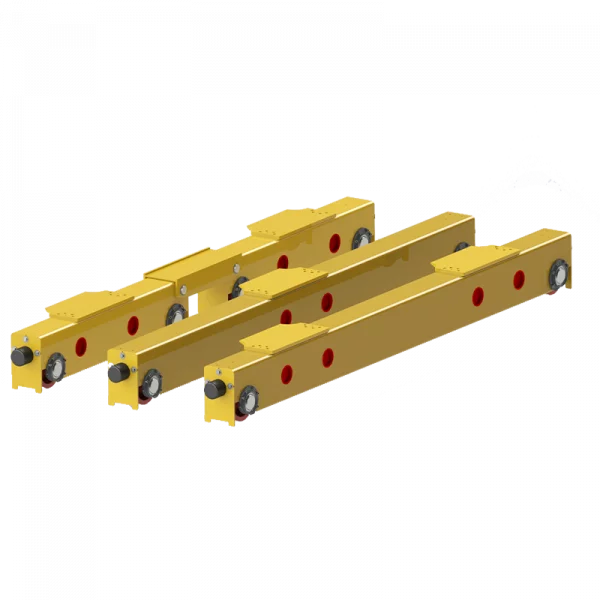
A suitable hoist should provide sufficient capacity and appropriate lifting speed for the application. Braking systems should help prevent unwanted load movement, while controls should allow operators to manage acceleration, deceleration, and positioning smoothly. Trolleys and end carriage systems also need to work reliably with the required travel configuration.
This integrated approach helps reduce unnecessary movement and supports a more predictable production environment.
Precision Is Important for Battery Manufacturing
Battery manufacturing involves processes where positioning accuracy can directly affect workflow efficiency. A lifting system that moves too aggressively or lacks adequate control can make positioning more difficult and increase the risk of contact between the load and surrounding equipment.
An overhead crane for battery manufacturing can address these challenges when its lifting and travel functions are appropriately configured. Variable speed control, suitable braking performance, and responsive operator controls can help achieve smoother load handling.
The selection of crane components should also account for the frequency of operation. A system used continuously throughout a production shift may require components designed for a different duty cycle than equipment used occasionally. Considering actual operating conditions at the design stage can help prevent premature component wear and unnecessary maintenance requirements.
Safety and Process Control Should Work Together
Safety in battery manufacturing is not limited to the rated capacity of a crane. The complete lifting system must provide controlled operation throughout lifting, travel, positioning, and lowering.
Mechanical components such as brakes and hooks need to match the intended load and operating conditions. Electrical and control components also play an important role by allowing operators to manage crane movements accurately.
Process control is equally important. When lifting equipment behaves consistently, operators can develop repeatable handling procedures and reduce unnecessary manual adjustments. This can be particularly useful in production environments where similar lifting tasks are performed many times each day.
Regular inspection and maintenance should also form part of the equipment management strategy. Monitoring wear on critical components and addressing problems before they affect operation can help maintain reliable lifting performance.
Choosing Crane Components for a Complete Lifting System
When evaluating crane components, manufacturers and facility managers should look beyond individual specifications. Compatibility between components is equally important. A hoist with adequate capacity, for example, still needs to work correctly with the trolley, controls, power supply, braking system, and structural configuration.
Environmental conditions should also be considered. Temperature, dust, humidity, operating frequency, available installation space, and access for maintenance can all influence component selection.
For facilities upgrading existing equipment, compatibility with the current crane structure may be another consideration. Replacing or upgrading selected components can sometimes provide a practical way to improve lifting performance without replacing an entire system, provided the existing structure and equipment are suitable for the modification.
WORLDHOISTS for EV Production Lifting Applications
WORLDHOISTS provides lifting equipment and crane components for applications where controlled material handling is required. Its product range can support different lifting configurations, including applications involving hoists and overhead lifting systems.
For EV manufacturing facilities, the focus should remain on matching equipment specifications with actual production requirements. Whether the application involves battery pack assembly, component transfer, workstation handling, or another repetitive lifting process, the appropriate EV production lifting solution should balance load capacity, movement control, operating frequency, installation conditions, and maintenance considerations.
A careful assessment of these factors can help ensure that the selected crane components support both daily operations and longer term equipment requirements.
Building a More Reliable Battery Handling Process
As EV battery production becomes increasingly sophisticated, lifting systems need to provide consistent and controlled performance. The right crane components can contribute to safer handling, more accurate positioning, and smoother production processes.
Rather than selecting components based only on lifting capacity, it is important to consider the complete operating environment and how each component interacts with the rest of the system. With appropriate engineering and equipment selection, WORLDHOISTS can support lifting applications where reliability, precision, and process control are central to everyday material handling.
