Energy systems can generate large amounts of operational data without making energy management any easier. Solar production, battery charging, electricity consumption, tariffs, and system status may all be recorded, yet operators can still struggle to answer basic questions: Where is energy being used? How has consumption changed? When should storage respond to electricity prices? Which site needs attention?
Those gaps are where energy management software becomes useful. Its role is not simply to display more information, but to turn scattered operating data into a clearer basis for monitoring, analysis, and action.
How Energy Management Software Connects Different Energy Data
A common problem appears when energy data is available but cannot easily be viewed as one connected picture. Separate equipment interfaces may show generation, storage, or consumption independently, leaving users to piece together the overall energy flow themselves.
An effective platform brings those elements into a more coherent view. Production and consumption can then be considered together rather than as isolated numbers. FoxCloud 2.0, for example, is designed to let users monitor and control home energy use while tracking production and consumption through a single application.
For commercial operators, the same visibility problem can become more complicated because several energy assets may operate simultaneously. Without a consolidated view, identifying unusual operating patterns or understanding how different assets interact becomes unnecessarily difficult.
Why Historical Consumption Is Harder to Turn Into Decisions
Real-time data answers what is happening now. It does not necessarily explain what normally happens at a particular site.
Historical records become valuable when operators can compare energy behavior across different periods. A sudden change in consumption, a recurring demand pattern, or a shift in solar production may be difficult to recognize from isolated readings.
FoxCloud 2.0 provides production and consumption trends that can be viewed by day, week, month, or year, giving users a longer operating perspective rather than limiting analysis to current conditions.
That distinction matters for energy planning. Energy management software can turn historical data into a reference point for future decisions, helping users move from “What is happening?” toward “Is this pattern normal, and what should change?”
Tariffs Turn Energy Management Into a Timing Problem
Electricity costs do not always remain constant throughout the day. Time-of-use structures and dynamic pricing can make the timing of energy consumption and storage as important as the amount consumed.
Manual management becomes difficult once tariff periods change frequently or system operators need to coordinate storage behavior with price signals. A platform needs to connect tariff information with the operating schedule rather than simply displaying the current electricity price.
FoxCloud 2.0 addresses this problem through configurable tariff management. Its platform supports manual tariff plans and Smart Tariff options, while its published workflow allows users to select a time mode, review the settings, and apply them. The platform states that manual tariff configuration can include up to 96 slots.
The underlying problem is therefore not simply “high electricity prices.” It is the difficulty of translating changing prices into an energy operating strategy.
Remote Management Becomes Critical Across Distributed Assets
Physical access is another limitation that becomes obvious once energy assets are spread across homes, commercial buildings, or different locations.
An operator cannot always stand beside an inverter, battery system, or other energy asset when information is needed. Remote monitoring provides visibility without requiring a site visit, while remote control can make appropriate operational responses more practical.
FoxCloud 2.0 is presented as supporting control of energy dynamics from anywhere, while its web platform is designed for installers and distributors managing plant operation, monitoring, and maintenance.
For industrial energy management software, remote capability becomes particularly relevant when service teams oversee distributed installations. The objective is not merely convenience; remote access can reduce the dependence on physical presence for routine oversight.
Multiple Sites Expose the Limits of Standalone Monitoring
Managing one energy system is fundamentally different from managing a portfolio. Once multiple plants or customer sites are involved, checking each system separately can make it difficult to establish priorities.
Operators may need to identify which sites are performing differently, compare production trends, or determine where intervention is most urgent. A platform built around individual device monitoring may not provide enough context for those decisions.
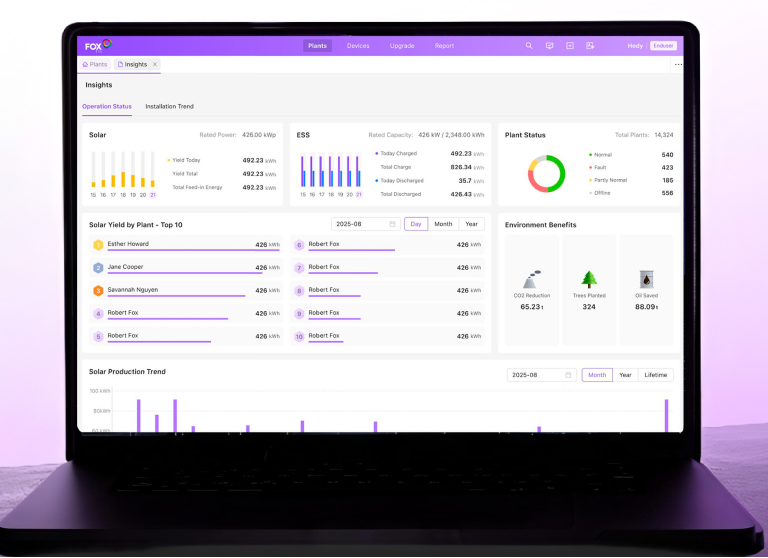
FoxCloud Web 2.0 addresses this broader management requirement with plant rankings, detailed statistics, production trends, and account-level views for solar and energy storage systems.
The G-MAX Plus C&I energy storage system transmits operating data to Fox ESS Cloud through Ethernet or 4G and supports operating modes such as peak shaving, load shedding, PV-storage energy control, and frequency regulation.
FoxCloud 2.0 as a Practical Response to These Problems
Taken together, these use cases show why energy management software is increasingly about connecting information with decisions. Data visibility addresses fragmented energy flows; historical analysis provides context; tariff management deals with changing price signals; remote access reduces dependence on site visits; and portfolio-level views help operators manage multiple assets.
Monitoring becomes more valuable when the information can lead directly to an operational decision. FoxCloud 2.0 combines visibility into production and consumption with historical trends, tariff configuration, and energy controls, while its web environment extends those capabilities to professional users responsible for plant management.
