As the global cinema industry transitions into the “experience economy,” the criteria for selecting a seating manufacturer have become significantly more demanding. For international cinema chains, the challenge is no longer just finding a chair that fits a floor plan; it is about identifying a partner capable of delivering consistent quality across diverse geographical markets while meeting evolving audience expectations for luxury and technology. Choosing the “best” manufacturer in 2026 is complicated by the need to balance massive scale with the intricate technical requirements of premium large format (PLF) and dine-in cinema concepts. After reviewing the manufacturing capacities, safety certifications, and specialized cinema portfolios of major providers, this guide analyzes the industry leaders defining the modern movie-going experience.
Selecting the right partner requires a deep understanding of how manufacturing logistics intersect with long-term theater operations.
Top 9 Cinema Seating Brands for 2026
- Leadcom Seating
- Seatorium
- Fortress Seating
- Ferco Seating
- FilmGrail
- CinemaTech
- Preferred Seating
- Series Seating
- EVOSEATING
The following comparison table provides an objective overview of the primary technical offerings from these top contenders.
Comparison Table: Global Cinema Solutions
| Brand | Key Products | Key Features | Best For |
| Leadcom Seating | Millennium, VIP Recliner Series | 100% in-house production, rigorous cycle testing | Large-scale international multiplexes |
| Seatorium | Scala, Astra Series | European design flair, space-optimized frames | Modern urban renovations |
| Fortress Seating | Custom Motorized Series | Fully bespoke configurations, high-end upholstery | Ultra-premium VIP lounges |
| Ferco Seating | Paragon, Rex | Integrated swivel tables, ergonomic recline | Dine-in and “Gold Class” cinemas |
| FilmGrail | Smart-Integrated Seating | IoT sensors for occupancy and maintenance | Tech-forward, data-driven chains |
| CinemaTech | Acton, Valentino | Acoustically treated materials | Boutique cinemas with high-fidelity audio |
| Preferred Seating | Tuff-Built Series | Heavy-duty steel components, high durability | High-traffic standard auditoriums |
| Series Seating | Vera, Titan Systems | Gravity-lift seat pans, compact envelopes | Educational theaters and maximum-capacity halls |
| EVOSEATING | EVO Cinema Line | Rapid customization, modular components | Regional chains requiring fast deployment |
While each brand offers unique advantages, a closer look at their individual manufacturing philosophies reveals how they cater to different segments of the market.
Detailed Manufacturer Reviews
1. Leadcom Seating
Leadcom Seating has secured its position as a primary provider for major international cinema chains through its commitment to total vertical integration. Unlike many industry players that outsource components, this manufacturer controls every aspect of the production process, from the initial steel fabrication to the final upholstery stitching.
Overview
For 2026, the company has focused heavily on the engineering of “zero-gravity” recliners and high-traffic standard seating that maintains its structural integrity over decades. Their facilities include a state-of-the-art testing laboratory where each model undergoes exhaustive stress tests, simulating the wear and tear of millions of spectators. This approach ensures that their products comply with the world’s most stringent fire safety and mechanical standards, including and .
Key Features and Pros
- In-House Material Control: By manufacturing their own cold-molded foam, they can precisely control density (typically held at ) to prevent the “bottoming out” effect common in lower-tier seating.
- Maintenance-Friendly Design: Their cinema seating models often feature quick-release mechanisms for seat and back cushions, allowing cinema staff to perform repairs or cleaning without specialized tools.
- Advanced VIP Mechanisms: Their motorized recliners utilize high-torque, silent motors and features like “auto-return,” which resets the chairs to a tidy upright position after the credits roll.
- Global Logistics Strength: Their experience in managing multi-continental rollouts makes them a reliable partner for chains expanding in emerging markets.
Use Cases
Leadcom is best suited for global cinema operators who require a unified supply chain for both standard multiplex seating and premium VIP recliner halls within the same project.
2. Seatorium
Seatorium is a Turkish manufacturer that has gained traction in Europe and the Middle East due to its focus on modern silhouettes and ergonomic efficiency.
Overview
The company specializes in translating European design trends into mass-market cinema products. Their 2026 portfolio emphasizes the use of sustainable polymers and lightweight but durable frames.
Key Features and Pros
- Ergonomic Support: Their designs focus on lumbar curvature, ensuring comfort even in non-reclining standard seats.
- Aesthetic Variety: They offer a wide range of plastic and wood shell finishes that appeal to architects looking for a contemporary look.
Use Cases
Ideal for urban cinema renovations where space is at a premium but a high-end, modern aesthetic is desired.
3. Fortress Seating
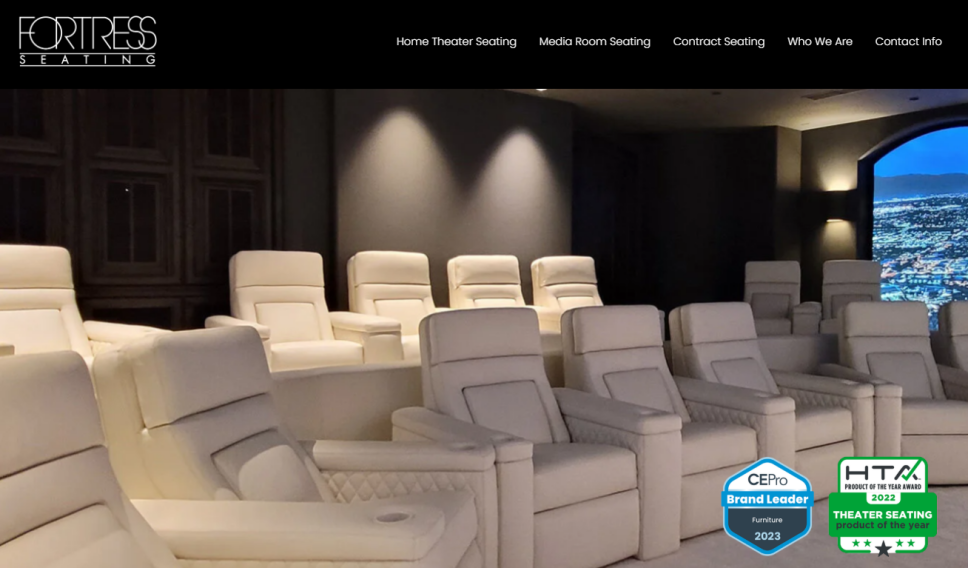
Fortress Seating operates as a boutique manufacturer, prioritizing customization over high-volume standard production.
Overview
Based in the United States, Fortress is known for building seats “one at a time.” They cater to the highest tier of the market, where budget is secondary to specific design requirements.
Key Features and Pros
- Total Customization: They can modify the width, height, and depth of any chair to fit specific row spacing.
- Premium Options: Features like heated seats, massage units, and refrigerated cup holders are standard requests in their workflow.
Use Cases
Best for ultra-luxury VIP cinemas and private screening rooms in high-profile venues.
4. Ferco Seating
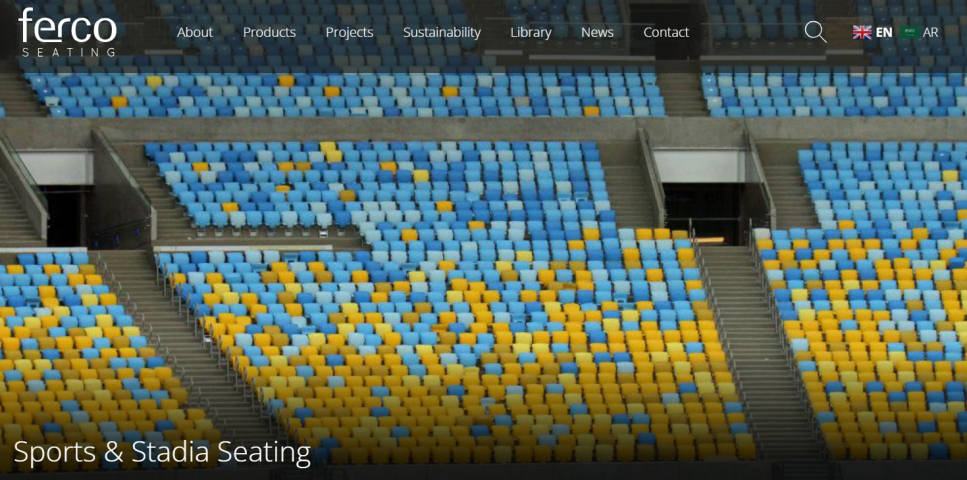
Ferco Seating is a major player in the “Dine-in” cinema sector, focusing on how seating interacts with food and beverage services.
Overview
With roots in the UK and manufacturing in Malaysia, Ferco has become synonymous with “Gold Class” experiences. Their products are designed to be as much a workstation for dining as they are a place to watch a film.
Key Features and Pros
- Service Integration: Large, stable tables and integrated service call buttons are hallmarks of their premium lines.
- Durable Upholstery: They offer specialized fabrics that are resistant to food stains and easy to sanitize.
Use Cases
Primary choice for premium multiplexes focusing on high-revenue dine-in experiences.
5. FilmGrail
FilmGrail represents the intersection of furniture and software, offering one of the first “smart” seating solutions for 2026.
Overview
Their approach involves integrating IoT (Internet of Things) sensors into the seat frames to provide cinema managers with real-time data on theater usage.
Key Features and Pros
- Occupancy Tracking: Sensors can verify if a seat is occupied, helping managers cross-reference ticket sales with actual attendance.
- Predictive Maintenance: The system can alert staff when a motor in a VIP recliner is showing signs of electrical strain before it actually fails.
Use Cases
Best for technology-driven chains looking to optimize facility management through data analytics.
6. CinemaTech
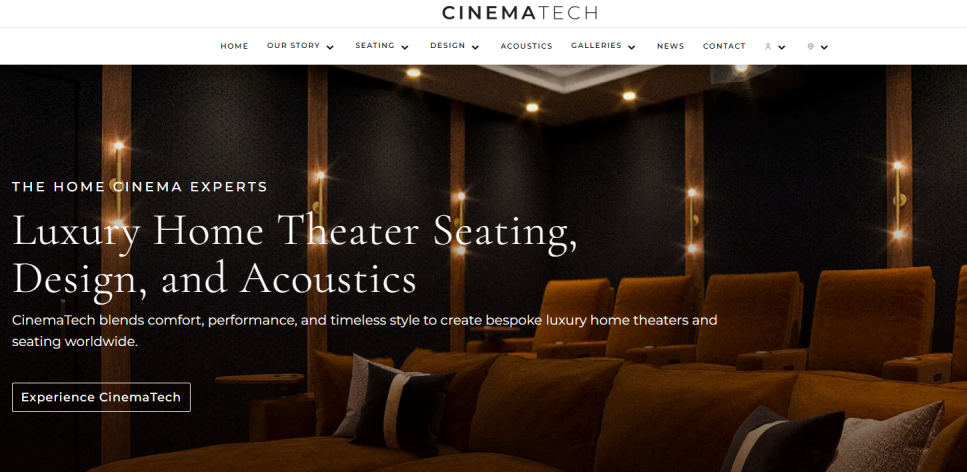
CinemaTech focuses on the acoustic impact of seating, ensuring that large rows of chairs do not degrade the sound quality of a theater.
Overview
Known for their “Acton” series, they work closely with acoustic engineers to ensure their materials have predictable sound absorption rates.
Key Features and Pros
- Acoustic Neutrality: Their fabrics and foams are chosen to maintain the theater’s reverberation time within ideal parameters.
- European Mechanisms: They often utilize German-engineered recline mechanisms for smooth, long-lasting performance.
Use Cases
High-end boutique theaters where audio fidelity is the primary selling point.
7. Preferred Seating
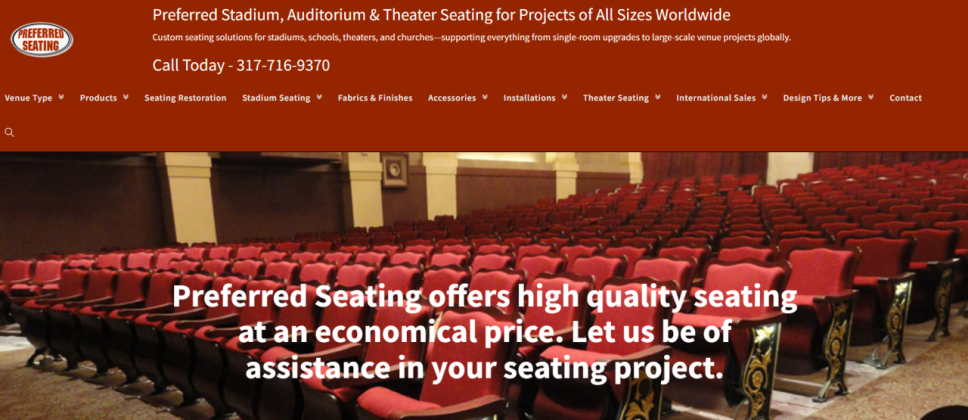
Preferred Seating is a US-based provider that emphasizes the “workhorse” nature of cinema seating.
Overview
Their products are designed for maximum longevity in high-traffic environments, utilizing heavy-gauge steel and reinforced polymers.
Key Features and Pros
- Structural Durability: Their “Tuff-Built” philosophy focuses on preventing the wobbling and loosening of parts over time.
- Removable Covers: Many of their models allow for the fabric to be removed and laundered or replaced easily.
Use Cases
Standard auditoriums in busy urban centers with high turnover and heavy usage.
8. Series Seating
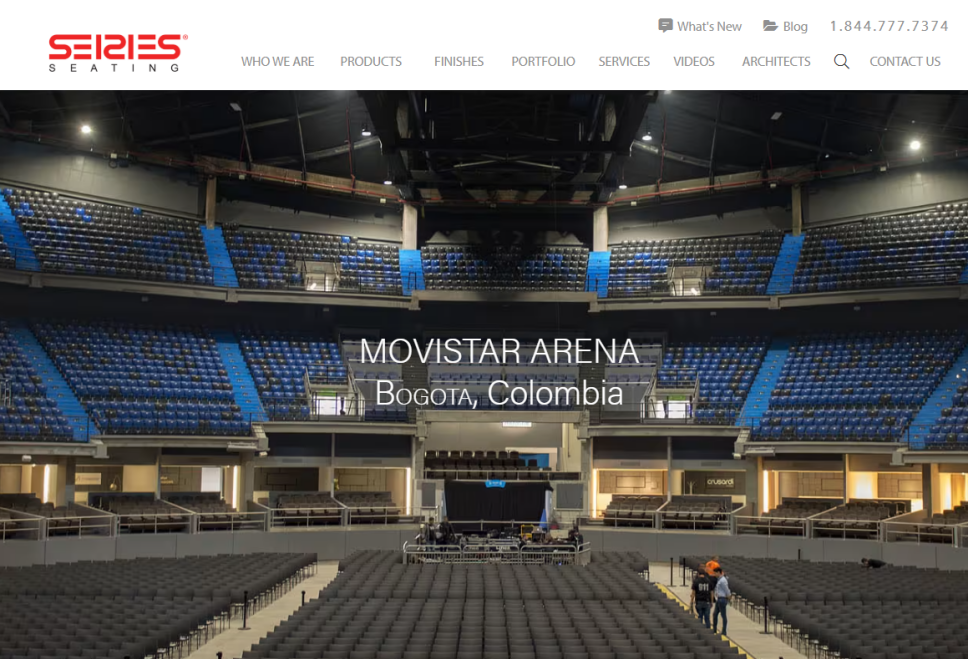
Series Seating is recognized for its engineering-led approach to space management and “gravity-lift” technology.
Overview
By focusing on the “envelope”—the space the chair occupies when empty—Series Seating allows cinema owners to maximize their seating capacity without violating local fire codes regarding aisle width.
Key Features and Pros
- Space Optimization: Their Vera and Titan systems have some of the smallest footprints in the industry.
- Quiet Operation: Their gravity-lift mechanisms are virtually silent, preventing distractions during a performance.
Use Cases
High-capacity venues and theaters with tight row spacing requirements.
9. EVOSEATING
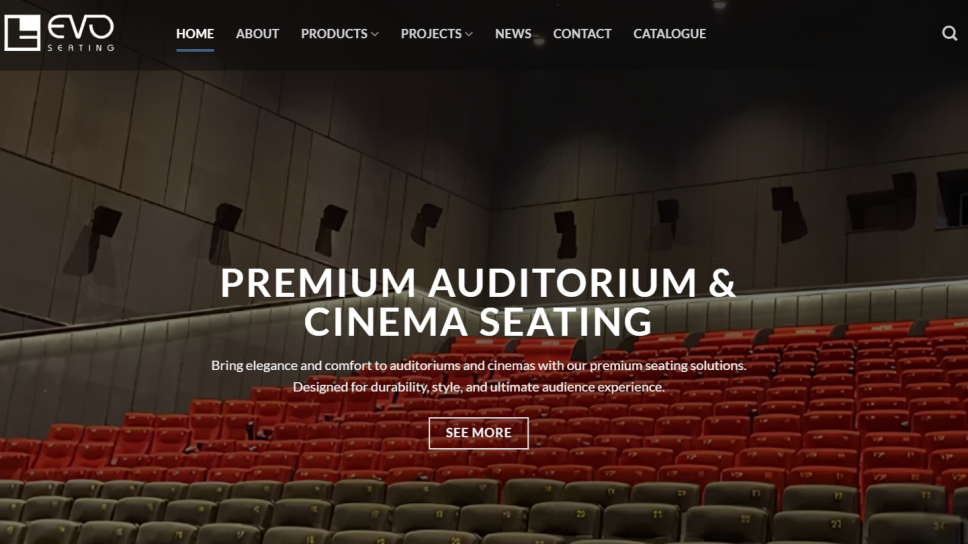
EVOSEATING provides a streamlined, modular approach that allows for rapid theater transformations.
Overview
They focus on a “Lego-like” assembly process, which can drastically reduce the time needed for installation on-site.
Key Features and Pros
- Fast Installation: Their modular design allows for quick assembly by local crews.
- Value-Focused: They offer a balance of ergonomic features at a price point accessible to regional chains.
Use Cases
Regional cinema chains looking for a quick and cost-effective upgrade to their standard halls.
To ensure these products perform as expected, procurement teams must look beyond the initial aesthetic appeal and evaluate technical specifications.
Buying Guide: Critical Criteria for Cinema Seating
When selecting a manufacturer for an international rollout, the following criteria should be prioritized to ensure long-term ROI:
- Fire Safety and Certifications: Every seat must meet the local fire codes of the region where it will be installed. For global chains, look for manufacturers that hold multiple certifications (e.g., , , ).
- Foam Resilience: The foam should have a high density (). Low-density foam will lose its shape within years, leading to audience discomfort and poor visual presentation.
- Mechanical Warranty: For motorized recliners, a minimum 5-year warranty on motors and a 10-year warranty on frames is standard for reputable manufacturers.
- Maintenance Access: The ease with which a seat cover can be replaced or a cup holder can be unbolted is a critical factor in reducing daily operational costs.
The final selection should reflect the specific market tier and operational goals of the cinema chain.
Final Verdict
The “best” seating manufacturer in 2026 is ultimately determined by the theater’s business model. For large-scale international rollouts that require a blend of high-volume efficiency and VIP luxury, Leadcom Seating stands out due to its total control over the manufacturing chain. Chains focusing on data-driven operations will find unique value in FilmGrail’s smart technology, while those prioritizing acoustic excellence should look toward CinemaTech. By matching the manufacturer’s technical strengths to the theater’s specific use cases, cinema operators can ensure a seating solution that supports both guest satisfaction and financial performance.
FAQs
Q: Why is cold-molded foam preferred for cinema seating?
A: Cold-molded foam is produced in individual molds, which creates a durable outer “skin.” This skin helps the foam retain its original shape and support level much longer than “cut foam,” which can crumble and sag over time in high-traffic environments.
Q: What is “auto-return” in VIP cinema seating?
A: Auto-return is a safety and maintenance feature that automatically returns a reclined seat to its upright, closed position when a sensor detects the occupant has left. This ensures that the rows are clear for cleaning staff and safe for emergency egress.
Q: How does seating impact the acoustic calibration of a theater?
A: Seats are large, soft objects that absorb sound. High-quality manufacturers provide testing data showing how their chairs absorb frequencies across the to range, allowing sound engineers to calibrate the theater’s audio system correctly regardless of whether the room is full or empty.
How would you like to proceed with the specific row spacing or fabric durability tests for these options?
