Decisions made for a 2027 opening will shape the park well beyond its first season. A new attraction occupies land, changes the ride mix and adds operating tasks that remain after the launch campaign. Evaluating water park equipment therefore begins with the experience the investment is meant to add.
Several directions merit attention: shared experiences, more varied ride sequences, evening presentation and space for later development. These are practical planning options rather than a forecast of visitor numbers. Their relevance depends on the existing attractions, intended audience, planned operating responsibilities and conditions of the proposed site.
Variety Measured by Experience
Two differently shaped rides can still offer much the same experience. If both serve individual thrill seekers through similar descents, a second installation may expand supply without broadening participation. Comparing the actual sequence of activities reveals more than comparing silhouettes on a proposed skyline.
The choice of water park slides can instead start with a gap in the line-up. A shared raft, a racing format and an enclosed individual descent involve different preparation and movement. The useful distinction is what guests do, not simply how the equipment looks.
An investor can test that distinction against the park’s existing offer. A proposed ride needs a defined audience and a role alongside neighbouring attractions. Variety becomes a planning criterion when each addition changes the available experience in a way that can be explained. The proposed difference needs to remain apparent during actual use.
Shared Rides and the Work around Them
Riding together changes the attraction before the descent begins. Raft collection, loading and return require an arrangement that matches the route through the park. A shared experience consequently involves both the ride geometry and the practical movement of people and equipment. Return arrangements begin where riders leave the shared raft.
A water park manufacturer can discuss the available configurations against that operating pattern. An attractive raft concept remains only part of the decision until collection points, storage and return movements have workable places. Those activities compete with other uses of the same space.
For a 2027 scheme, comparing water park slides through their complete operating cycle gives the investment discussion a clearer basis. A format that suits the audience but disrupts adjacent circulation may need a different position, a revised layout or a different place in the development programme.
An Evening Role for the Attraction
After-dark presentation is a distinct design choice. The effect sought might be a visible landmark or a different atmosphere around a ride. Either purpose needs to be considered alongside the intended operating hours rather than treated as an automatic reason to extend them.
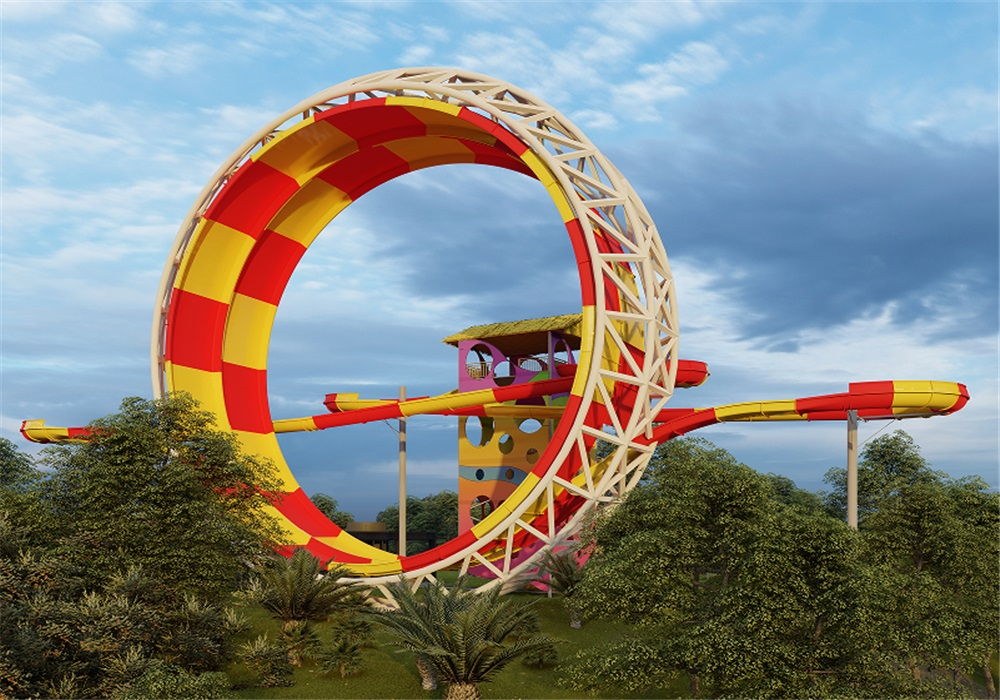
Water-screen projection and lighting give Jinchao‘s Sky Ring Slide an evening visual role alongside its descent. Its starting-height range is 12–15 m. The effects belong to this particular attraction concept; they do not establish a lighting package for every model in the range.
Viewed this way, water park equipment can contribute to a visual plan without turning the business case into a promise of higher attendance. The physical ride, its presentation and the surrounding guest areas remain separate questions that the project has to answer together.
Room for the Next Development Phase
Expansion space can disappear before any future attraction is selected. A tower, support or flume installed during the first phase may occupy the only practical route into another part of the site. A vacant patch on the master plan does not necessarily remain usable.
Early coordination with a water park manufacturer can identify where later equipment might connect with circulation and service areas. Reserving space means considering access and relationships as well as area. The future installation still has to reach its position and function beside the operating park.
A phased layout need not name the eventual attraction to protect a useful option. It can preserve an approach, a connection with an existing guest route and an area clear of permanent obstruction. Those reservations keep later choices open without assuming what the next purchase will be.
The current scheme can therefore be examined in two states: as the opening attraction mix and as the starting point for an addition. Differences between those drawings expose decisions that would otherwise remain invisible until another investment is proposed.
From Planning Direction to a Specific Brief
Ride concepts become comparable once their intended roles are explicit. Jinchao’s Interstellar Shuttle Slide, for example, carries two riders on a raft through a descent, an opposing slope and a return movement. That sequence offers a concrete alternative to simply adding another straight descent.
The discussion of water park slides can then connect the preferred experience with height, layout and operating requirements. The attraction’s role remains the reference point during comparison, so a visually distinctive proposal still has to answer the original project need.
A phased brief gives the water park manufacturer those priorities before individual models dominate the conversation. It records the required experience, usable site and room for expansion. Decisions about water park equipment can then be revisited without losing the purpose of the development.
A 2027 investment brief can bring several priorities together while keeping their purposes distinct. Shared riding, evening presentation and future expansion deserve attention where they answer real needs. The practical test for any 2027 trend is the role it can fulfil within a specific water-park development.
